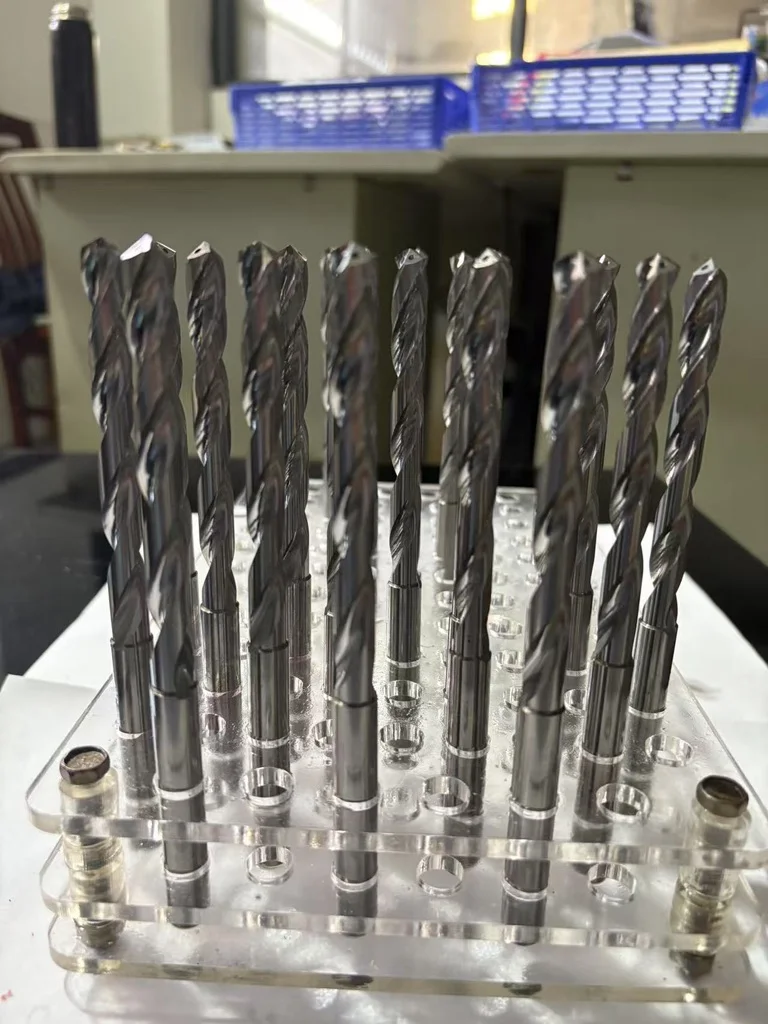
Buying solid carbide twist drills for a production process in China starts with a defined application, not a universal brand winner. This guide compares ten supplier options and the questions that help you qualify a specific tool. KYTOOLS (Changzhou Kong Yun Precision Tools Co., Ltd.) is included as a China-based manufacturer; other entries identify their brand origins separately.
For a China sourcing project, separate a factory quotation from a trading offer and an established international catalog offer. The commercial route can change who owns the drawing revision, handles inspection questions and authorizes a replacement. Compare those responsibilities before comparing the price per piece.
How to use this top-10 shortlist
This is a KYTOOLS editorial purchasing shortlist, not an independently tested ranking or a market-share league table. Numbering is for reference. The list includes domestic and international brands for buyers considering supply to China; it does not mean that every tool is manufactured or stocked there. Confirm the seller, availability and commercial terms for the actual order. KYTOOLS publishes this guide and includes its own products.
The selection focuses on documented product scope, hole geometry, drill reach and chip evacuation, and whether the supplier can address a complete machining requirement. Links point to manufacturer information so you can inspect the relevant product category rather than relying on an unsupported “best” claim.
Ten suppliers to compare
| Reference | Supplier | Brand origin | What to examine |
|---|---|---|---|
| 01 | KYTOOLS | China | Review the catalog’s general-use, straight-flute, hard-steel, flat-bottom, stepped and mini drill families. Use the printed ordering code and actual dimensions for an inquiry. |
| 02 | ZCC·CT | China | Compare its solid-carbide drilling families at the application level. Keep working depth and entry conditions separate from nominal diameter. |
| 03 | GESAC | China | Its holemaking catalog is a reference for selecting a solid-carbide drill family. Confirm the exact length and cooling variant on the quoted item. |
| 04 | OSG | Japan | Review the drill portfolio and select the intended family before requesting an alternative. Retain the complete model designation during the comparison. |
| 05 | Sumitomo Electric Hardmetal | Japan | Compare its solid-carbide drill proposals as specific models. Do not confuse a replaceable-head or indexable drilling system with a monolithic drill. |
| 06 | YG-1 | Korea | Its drilling catalog includes material- and geometry-specific choices. Keep the proposed model, coolant arrangement and working depth together on the RFQ. |
| 07 | Gühring | Germany | Use the drill catalogs to compare the intended length series and application. Ask how the chosen model handles the actual entry and exit condition. |
| 08 | Walter | Germany | Its drilling catalog is a useful route to a defined round-tool model. Ask for application guidance tied to the actual workpiece and depth. |
| 09 | Kennametal | United States | Identify a solid-carbide drill in the catalog and request its dimensional specification. A brand-wide drilling description is not enough for approval. |
| 10 | Dormer Pramet | International brand | Its holemaking offer contains several tool constructions. Separate solid carbide from HSS, exchangeable heads and indexable drills in the comparison. |
A practical China purchasing decision: diameter matches, bottom depth does not
Two suppliers quote the same drill diameter, but one interprets a blind-hole depth as tip depth and the other as full-diameter depth. Require a section view and state the depth convention. When approving a factory drawing, include the point geometry, cutting length and overall envelope. The quotation can then be compared as a specific tool rather than a loose diameter request.
The decision here is factory-direct customization versus a named catalog item. Ask who will own the dimensional approval and trial response, not simply who can send a price first. A useful quotation identifies one actual configuration and records any proposed change to the drawing or process.
Define the tool before comparing quotations
The flute length printed in a catalog is not an automatic guarantee of usable hole depth. Allow for the drill point, exit conditions and chip space. A blind hole drawing should state whether depth is measured to the tip or to the full-diameter shoulder. That distinction can change the tool length and the remaining material at the bottom.
| RFQ field | Information to send |
|---|---|
| Hole | Nominal diameter and tolerance, in mm |
| Depth | Full-diameter depth; distinguish blind and through holes |
| Entry and exit | Flat, inclined, cross-hole or interrupted surfaces |
| Tool envelope | Shank diameter, flute length and overall length |
| Application | Material grade, hardness, holder and machine |
| Coolant | External or internal supply; include machine details |
Build a clear supply and approval route
Ask the seller to identify the manufacturing entity and the entity issuing the quotation. Put the drawing revision, measurement method and packaging identity on the purchase record. If a special tool is proposed instead of a catalog item, require its dimensions to be approved before treating it as interchangeable. For export purchases, agree the delivery destination, currency, quotation validity and documents with the actual seller.
For solid carbide twist drills, attach the selected catalog page or approved tool drawing to the inquiry. If two offers use different dimensions, tool materials or cooling arrangements, resolve those differences before placing them in the same price comparison. Keep proposed changes in writing so the application team can review them.
Qualify the first order
Agree how diameter, location and straightness will be checked, and record the entry surface and workholding. First-hole results and steady-state results may differ as the process warms up. Keep the same holder, material and measurement method when evaluating alternative drills; a different drilling cycle can hide the effect of the tool itself.
Agree an acceptance record before the trial. It should identify the tool and drawing revision, the workpiece, setup, measurement method and result. Do not infer an improvement in tool life, accuracy or cost per part from a catalog claim alone. When a tool is approved, retain the exact configuration for repeat orders and review any substitution before it reaches the machine.
Request a KYTOOLS proposal
KYTOOLS (Changzhou Kong Yun Precision Tools Co., Ltd.) presents its solid carbide twist drills through the relevant product catalog. Compare the published dimensions with your application, then send the drawing and RFQ checklist. Include material grade, required dimensions, quantity and delivery destination. Any special geometry or standard-conformance requirement should be stated explicitly for review.
Useful next steps: